
By Lynn Buske, JONAH Organizer
Opening
Human potential is almost endless. With the development of Artificial Intelligence (AI), there are now possibilities we couldn’t even fathom. History has repeatedly shown us that new technology can be carried out in both good and harmful ways. Development requires understanding, intention, and a sense of responsibility for outcomes in order to protect the inherent value of all living beings.
What values does our current use of AI perpetuate? Are those values in line with the trajectory of where we want to be as a society? Whose opinion matters? These questions are just some of what I entered my dive into the rabbit hole with.
Background
JONAH organizes people around values, and empowers people to have integrity with, stand up for, and live out their values for the common good. If we aren’t living out our values then we suffer endlessly. Our overarching value in JONAH is a community that works (as best as we can) for every. single. living. being. in it. When injustice happens, when people are marginalized, JONAH tries to be part of the conversation, to ask the question, “What do we truly value and are we living up to it?”
JONAH’s values are: radical inclusion (respecting the inherent dignity of all humans), acting from LOVE, reparations – repairing past harms before moving forward – and sustainability – both for our planet and for future generations. We speak those loudly, and try to call out when those values are being trodden on.
The use of Artificial Intelligence (AI) has been an increasing topic of conversation in many spaces in my role as a community organizer. I dug into the topic seeking to understand it on a deeper and broader level, through the lens of values. The question I’m still carrying: does AI even have the capacity to carry out our collective values?
Defining AI
What is Artificial Intelligence anyway? IBM.com (the International Business Machines Corporation and leading American multinational technology and consulting company) defines AI as: “technology that enables computers and machines to simulate human learning, comprehension, problem solving, decision making, creativity, and autonomy.”
It is almost obvious in its own definition some of the plusses and minuses. I researched ALL my questions in order to understand. I was surprised by a few general things in my search:
- For something so new there are endless studies already, and many seemed out of date already.
- Similarly, the amount of organizations that have developed, globally, to try to put parameters on AI are almost countless.
- No one thinks there are no risks. NO ONE.
- The benefits are mostly obvious and the problems seem largely obvious, but the path forward and how to use AI ethically are not so obvious.
Benefits of AI
Clearly there are benefits or we wouldn’t be heading in this direction to begin with. I can easily summarize those benefits:
- There is much money to be made with this technology.
- AI is fun, with it we can discover what is possible, and it creates efficiency to an unimaginable level.
- It has the potential to minimize human error (though while having its own errors) and make huge strides in scientific research in math, science, medicine, geoscience, physics, chemistry, and life science.
- Additionally, it can create great, positive strides for improvements in areas such as disability access, construction, imagination, and communication support.
Downsides
There is such a vast array of specific downsides that I cannot possibly explain or really even list them all here. Here is an overview list. You can reference my sources at the end to learn more.
- Massive environmental concerns (see image)
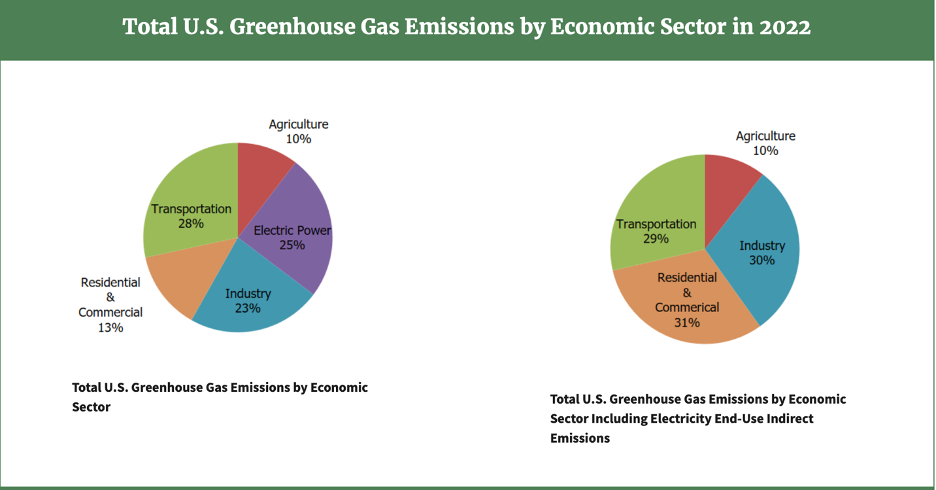
Note: While some AI efforts are slowly helping make advancements to improve its environmental impact, there is environmental inequity – not all places that AI is being built have the environmental capacity to supply it, offset the loss of resources, or make modifications. People are inequitably being affected environmentally based on where they live.
- AI has been designed with bias. A nearly impossible task to avoid AND also has been done so intentionally.
- AI can be easily misused for harm.
- Job displacement – AI literally takes people’s jobs.
- Safety, on many levels, is a real concern.
- Data mining is happening.
- AI use is highly ADDICTIVE.
- It is contributing to our societal speed – everything going faster.
- AI seems to reduce critical thinking, generate a reliance on it, and cause a lack of scrutiny. AI is already influencing people’s day to day decisions and beliefs.
Note: From a mental health perspective, autonomy, connection, and belonging are highly important in human development. AI can produce inaccurate expectations of authentic relationships, and has already caused harm to youth.
- Loss of human connection.
- Authenticity is put into question and also losing its credibility. This has already led to a general loss of trust… of information AND people.
Additionally, here is a good quote on the health impact of AI use from Sandra Wagand of helptherapy.com in May of 2023:
“Studies have shown that excessive use of technology can alter brain structure and function, leading to changes in neural connectivity and decreased cognitive performance. Additionally, technology overload can disrupt the brain’s natural rhythms, leading to sleep disturbances and fatigue. Plus, our adrenaline rises, speeding up the addiction process. Technology overload can also have physical effects—including eye strain, headaches, neck pain, and poor posture. Moreover, excessive use of technology can lead to a sedentary lifestyle, increasing the risk of obesity, heart disease, and other chronic conditions.”
What this means for JONAH… and the rest of us
While the future is completely unpredictable, which has its own plusses and minuses, our current value system is already being attacked.
Right now AI does NOT uplift the values of JONAH. JONAH WILL NOT support the use of Artificial Intelligence in the daily life of our organization. This has already been written into our communication policy. As for other use of AI – more learning, and many more discussions, are needed before JONAH takes an official stance.
As for me? While I remain open to the possibility of positive change and always hold hope for humans, I’m personally sickened that technology development seems more interested in speed, efficiency, and money over intention, sustainability, and equity. My concern is that AI is inescapable. I feel I cannot even make a values choice in my day to day life – Microsoft had a little AI bubble on my document while typing this!
While there are many great uses for AI, we have to acknowledge the many ways it is NOT good. And, both individually and collectively, we must decide how we navigate it.
Also, as with any social issue, those that are directly affected by it NEED to be consulted in its implementation – even in its very consideration. For something so huge to be released to the public without consultation is intolerable.
While it is up to each of us to uphold our own personal values, collectively we have a responsibility to act on behalf of our entire community. We MUST acknowledge that what we put into things, like AI, is what we will get out of it, AND that those marginalized will get the worst of it.
Sources:
- Earth.Org “The Real Impact of AI”, 2023
- Harvard Business Review “The Uneven Distribution of AI’s Env Impacts”, 2024
- “AI – the good, the bad, and the scary” from Virginia Tech, 2023
- cell.com/the-innovation
- https://theconversation.com/despite-its-steep-environmental-costs-ai-might-also-help-save-the-planet-272474
- https://www.helptherapy.com/post/the-impact-of-technology-overload-on-the-nervous-system
- https://www.epa.gov/ghgemissions/sources-greenhouse-gas-emissions
- https://ourworldindata.org/emissions-by-sector
- https://www.betterhelp.com/advice/psychologists/is-autonomy-psychology-a-thing-and-how-can-i-benefit/
- https://cic.nyu.edu/resources/building-trust-in-ai-through-justice/ by Nate Edwards December 11, 2025
- https://ourfutureisscience.org/blog/ai-and-social-justice-navigating-the-impact-of-artificial-intelligence-on-societys-equity-and-inclusion
- https://news.stanford.edu/stories/2025/08/ai-companions-chatbots-teens-young-people-risks-dangers-study
- https://publichealth.gmu.edu/news/2025-09/ai-loneliness-and-value-human-connection
- https://www.psychologytoday.com/us/blog/urban-survival/202502/how-ai-could-shape-our-relationships-and-social-interactions
PS AI was intentionally NOT used in the production of this article.